Empowering Communication: Strategies For Nonverbal Children
- Alessia Holowachuk
- Oct 28, 2024
- 5 min read

Supporting communication for nonverbal (or minimally verbal) children opens up a world where every child’s thoughts, needs, and emotions are recognized and heard. For parents, it’s both an act of love and an investment in each child’s future. Whether a child is nonverbal or communicates minimally, there are tools, techniques, and approaches to foster meaningful connections. Let’s explore practical and heart-centred strategies that empower communication, strengthen relationships, and build confidence for these young communicators.

Understanding Communication Beyond Words
When we think of communication, spoken words might be what first comes to mind. However, communication is so much more than verbal language. It includes gestures, facial expressions, visual cues, written words, and even technology use. Learning to communicate through alternative methods can create a vital bridge to self-expression for nonverbal or minimally verbal children. This fosters autonomy and meaningful connection (Light & Drager, 2007).
Learning these forms of communication empowers children to express their preferences, feelings, and ideas in ways that suit their unique abilities. Understanding that communication is broader than speech alone allows us to meet children where they are. This creates an accessible and inclusive world for them.

Picture Exchange Communication System (PECS)
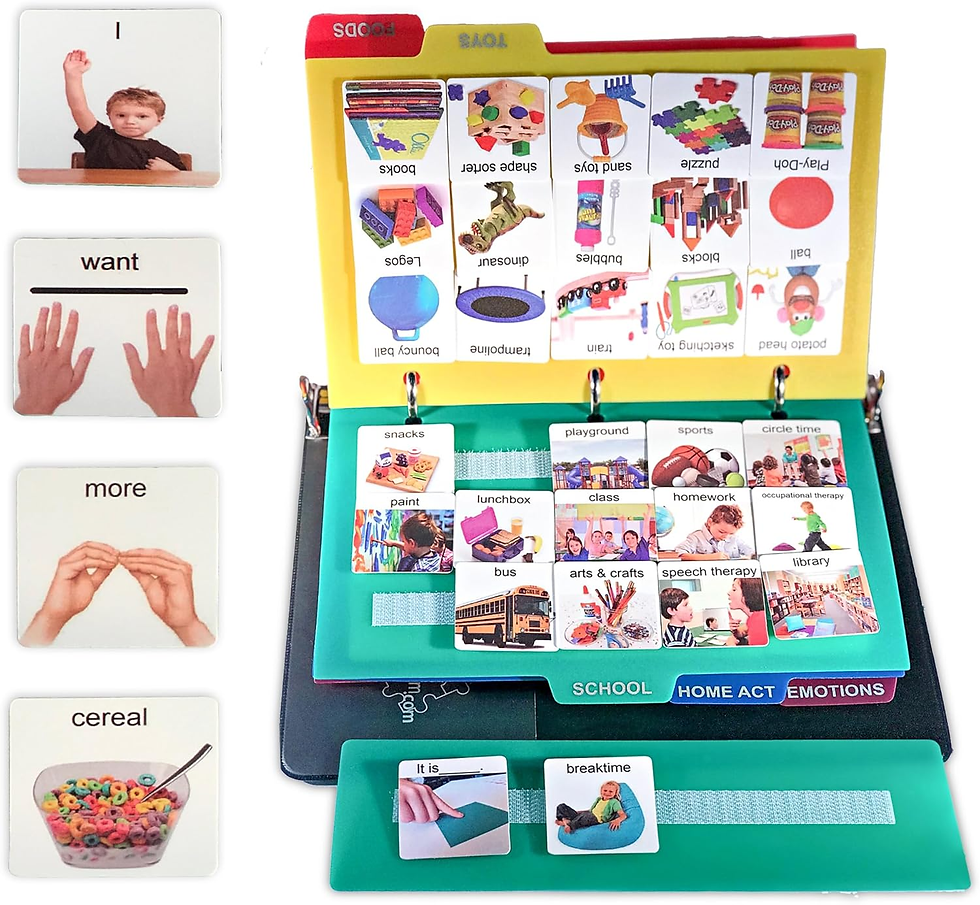
PECS is a structured communication tool where children learn to exchange pictures to communicate needs and preferences. Initially designed for children on the autism spectrum, PECS has shown great success across a wide range of communication difficulties (Frost & Bondy, 2002).
The system follows six distinct phases, starting with simple exchanges (e.g., handing a picture of a snack to request it) and progressing to sentence formation and responsive communication. One of the most compelling aspects of PECS is its emphasis on the exchange, reinforcing the idea that communication is a two-way interaction, which builds social engagement.
Actionable Tip: Use PECS during everyday activities. For example, if your child wants a snack, have them use the picture of their preferred snack before giving it to them. This routine helps reinforce the concept of using images to express their needs.
Sign Language and Gestures
Sign language, especially American Sign Language (ASL), and customized gestures can become valuable tools for communication, particularly for children who have motor control for signing but struggle with verbal language. Teaching a child simple signs like “more,” “help,” “eat,” and “finished” gives them a practical way to communicate immediate needs.
For minimally verbal children, combining spoken words with simple sign language can strengthen both forms of communication and help them bridge into spoken language when they’re ready. Signs can reduce frustration by providing children with a reliable method to make themselves understood (Goldin-Meadow, 2003).
Actionable Tip: Start with just a few basic signs and use them consistently. For example, during mealtime, show and use the sign for “more” when asking if they want more food. Reinforcing these signs through repetition in everyday situations helps children internalize their meaning and usage.

Augmentative and Alternative Communication (AAC) Devices
AAC devices are game-changers in nonverbal and minimally verbal communication. They range from simple picture boards to advanced speech-generating devices. This allows for children to express themselves with words, sentences, and even complex thoughts despite their verbal challenges.
AAC devices come in various forms:
Low-tech options include communication boards or books containing pictures or symbols. Children can point to or touch images to communicate basic needs or emotions.
Mid-tech devices include tools like "GoTalk" devices that allow children to press buttons that play pre-recorded words or phrases.
High-tech options include speech-generating devices or apps on tablets that turn selections into spoken language.
AAC devices are often customized to a child’s individual needs. For instance, an AAC tablet app can include favourite foods, family members, and sensory items, making it more engaging and relevant for the child. AAC options empower children to build vocabulary and communicate progressively more complex ideas (Beukelman & Light, 2020).
Actionable Tip: If you’re new to AAC, start small. Introduce a few symbols or words at a time, focusing on essential needs like “eat,” “play,” and “help.” As the child becomes comfortable, gradually expand the vocabulary on the device or board.

Visual Schedules and Cue Cards
Visual schedules provide a clear structure, helping children understand what to expect next and what’s happening around them. These schedules can range from simple picture cards showing the steps of a morning routine (e.g., “wake up,” “brush teeth,” “eat breakfast”) to more detailed sequences for complex tasks. Visual cue cards with simple symbols or photos also help children understand and follow directions, providing nonverbal children a framework to interpret daily routines and transitions.
Visual supports are especially helpful in reducing anxiety, as they create predictability, allowing children to anticipate upcoming activities. This predictability supports emotional regulation and creates a sense of security (Hodgdon, 1995).
Actionable Tip: Try starting with a daily visual schedule. Use pictures or simple drawings to represent each task, arranging them in order. For instance, after each task is completed, let the child remove or mark it off. This not only provides a sense of accomplishment but also reinforces their engagement with the schedule.

Social Stories
Social stories are short and individualized narratives that help children understand social situations. For children who are nonverbal or minimally verbal, social stories can break down everyday scenarios (like going to the grocery store, visiting a friend, or sharing toys) into simple, step-by-step narratives. These stories can help a child prepare for new or challenging experiences, reducing stress and building confidence (Gray, 2015).
When read consistently, social stories build familiarity with certain phrases and actions, which can sometimes lead to spontaneous use of the phrases when the child encounters similar situations in real life.
Actionable Tip: Write a few simple social stories based on your child’s daily experiences or upcoming events. Use photos or pictures that resonate with them. For example, a familiar setting or item they see regularly. Read the story together daily and discuss any changes or new expectations they might encounter.

Embracing Progress One Step at a Time
Supporting communication for nonverbal and minimally verbal children is an ongoing, evolving process. It’s about finding methods that suit each child’s unique preferences and empowering them to use their voice—whether that voice is verbal, visual, or tactile. The journey may come with moments of frustration, but also immense joy as they find new ways to connect with those around them.
Remember, building these communication skills takes time, patience, and a spirit of collaboration. Celebrate each small milestone, recognizing that each step is a testament to the child’s growth and potential. With encouragement, love, and the right tools, you’ll help them build the bridges they need to thrive in a world that’s waiting to hear their unique voice.
References
Beukelman, D. R., & Light, J. C. (2020). Augmentative & Alternative Communication: Supporting Children and Adults with Complex Communication Needs. Paul H. Brookes Publishing.
Frost, L., & Bondy, A. (2002). The Picture Exchange Communication System Training Manual. Pyramid Educational Consultants.
Goldin-Meadow, S. (2003). Hearing Gesture: How Our Hands Help Us Think. Harvard University Press.
Gray, C. (2015). The New Social Story Book. Future Horizons.
Hodgdon, L. Q. (1995). Visual Strategies for Improving Communication: Practical Supports for School and Home. QuirkRoberts Publishing.
Schaaf, R. C., & Lane, S. J. (2015). Understanding the Nature of Sensory Integration with Diverse Populations. Pro-Ed.


Comments